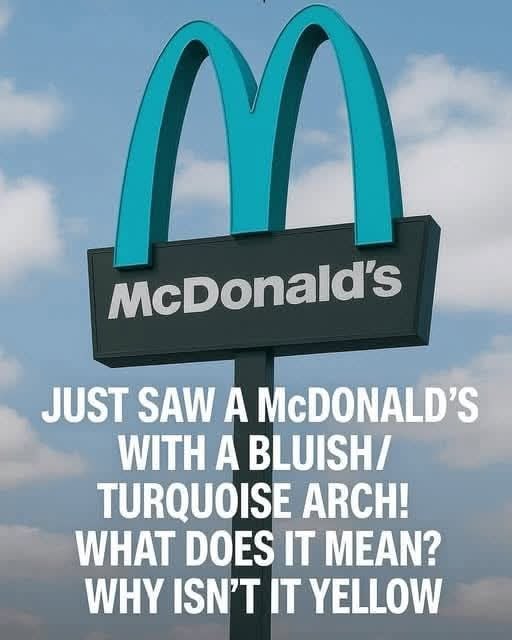
If you ever find yourself driving through Sedona, Arizona, a small desert city surrounded by majestic red rock formations, you might double-take when you spot the McDonald’s. Something about it feels different — familiar, yet slightly off. Then it hits you. The arches aren’t gold. They’re turquoise.
It’s the only McDonald’s in the world with arches that color — and it’s not a marketing stunt. It’s a story about place, preservation, and the quiet ways a community can hold on to its identity.
A Town Like No Other
Sedona isn’t a typical town, and that’s exactly the point. Nestled between crimson cliffs and ancient sandstone towers, it’s a place that draws people for its natural beauty, spiritual energy, and striking harmony between human life and landscape. Even before it became a tourist destination, Sedona was known for its deep respect for nature. The city’s building codes reflect that philosophy — strict rules ensure that nothing built here overshadows the landscape that defines it.
So when McDonald’s decided to open a restaurant in Sedona back in 1993, the company found itself up against something it rarely encountered: a community unwilling to compromise its aesthetic for a global brand.
The Color Problem
The conflict started with color. The famous “Golden Arches” are one of the most recognizable symbols in the world — bright, loud, and impossible to miss. But city planners in Sedona saw a problem. The iconic yellow would clash dramatically with the surrounding scenery: the deep, rust-colored rocks and soft desert palette that make the city one of the most photographed places in the American Southwest.
For Sedona, it was a victory of identity. For McDonald’s, it became an unlikely lesson in harmony and flexibility. Tourists visiting the city began to take notice. The turquoise arches, contrasting softly against the terracotta cliffs, became a must-see landmark in their own right.
Today, visitors often stop just to take photos of the sign — some without even ordering a meal. The restaurant itself looks nothing like a typical fast-food outlet: earth-toned stucco walls, low-slung architecture, and desert landscaping designed to complement the surroundings rather than compete with them.
Inside, it’s much like any McDonald’s — but outside, it’s something else entirely: a piece of global branding shaped by local values.
More Than Just a Color
The turquoise arches also tell a deeper story about Sedona’s commitment to preservation. The city’s guidelines extend far beyond McDonald’s — from fast-food chains to gas stations to hotels, every building is expected to respect the landscape. Signs must be low to the ground, lighting must remain subdued, and colors must mirror the natural hues of the surrounding terrain.
The philosophy is simple: in Sedona, nature leads, and humanity follows. That’s part of what makes the city so striking. Even as tourism has boomed — millions of visitors come each year to hike, meditate, or simply take in the view — Sedona has managed to hold onto its sense of calm and authenticity.

Be First to Comment