We could only work so many hours a day, so we’d take the work home and make sure we nailed it on the first take.
Behind the scenes, his role extended far beyond performing. He was instrumental in shaping the group’s creative identity, contributing as a songwriter and musical architect. He co-wrote some of their most recognizable songs, including “One Bad Apple” and the more experimental and socially charged “Crazy Horses,” which earned critical attention for its bold sound and message.
The group’s rise to international fame accelerated after their appearances on The Andy Williams Show, which introduced them to a wide audience and launched them into global stardom.
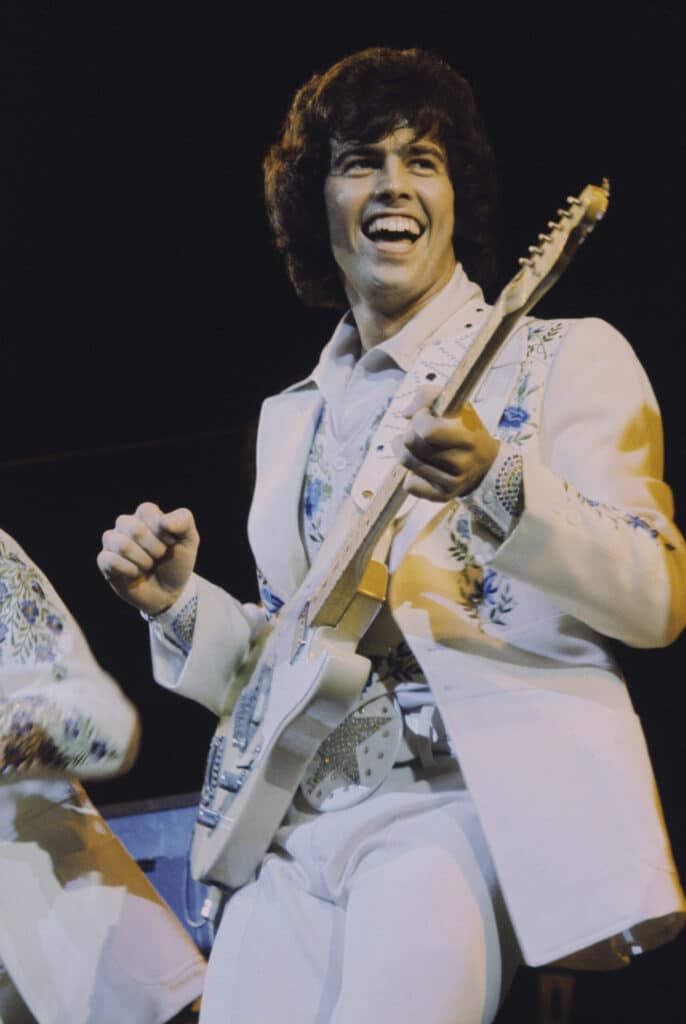
Despite the demands of fame, Alan’s life was also marked by resilience. In 1987, he was diagnosed with multiple sclerosis, a chronic condition that he lived with for decades. While the illness gradually limited his ability to perform, he continued to remain connected to the group and its legacy. By 2007, he had largely stepped away from performing, though his influence remained deeply embedded in everything the family created.
Outside of music, his life reflected strong personal convictions. Like the rest of his family, he was a devoted member of The Church of Jesus Christ of Latter-day Saints, and his faith played a central role in his identity.
Earlier in his life, he also served in the California Army National Guard, stationed at Fort Ord as part of the 144th artillery unit. During that time, he earned the nickname “the Mormon Dream,” a reflection of both his discipline and the values he carried with him.
In 1974, he married Suzanne Pinegar, and together they built a large and tightly connected family. They raised eight sons, and over the years, that family grew to include 30 grandchildren and five great-grandchildren.

In many ways, that legacy may be as significant as his musical one.
Because while Alan Osmond helped shape the sound of a generation, he also lived a life defined by commitment—to his family, his faith, and the work that brought them all together.
He leaves behind not only a catalog of music that continues to resonate, but also a story rooted in discipline, resilience, and connection.
And for many who grew up with the music of The Osmonds, that legacy is unlikely to fade anytime soon.
Be First to Comment