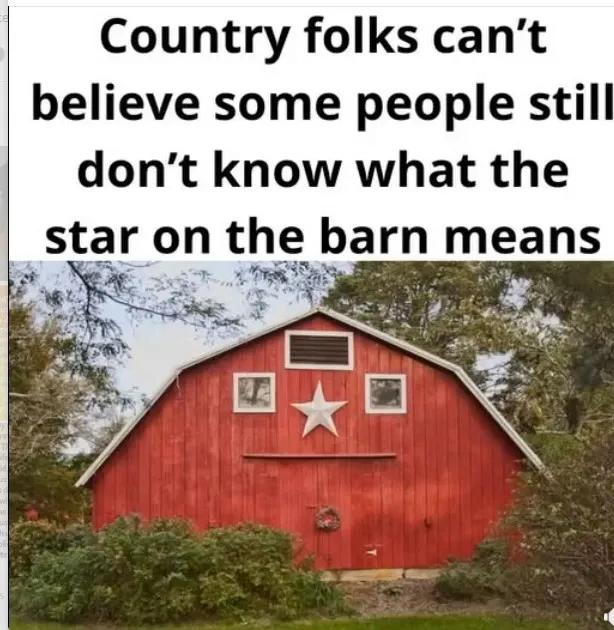
If you’ve ever driven through rural areas and spotted a large, five-pointed star on a barn or farmhouse, you may have wondered what it represents. These stars, often called barn stars, Amish stars, or hex signs, have been part of American farm culture for generations. Their origins go back to the 18th and 19th centuries, when Pennsylvania Dutch farmers—descendants of German settlers—believed that hanging a star on a barn would bring luck and protection to their land, animals, and harvest.
Beyond their shape, the colors of barn stars carried specific meanings. Red often symbolized good fortune and strength, blue represented peace and balance, green stood for growth and renewal, black offered protection, and white reflected purity and hope. Some stars featured intricate hex sign designs, with geometric patterns similar to mandalas, which added deeper layers of symbolism related to prosperity, harmony, and family pride.

Be First to Comment